Wednesday, July 21, 2010

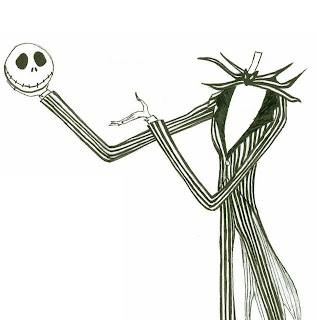
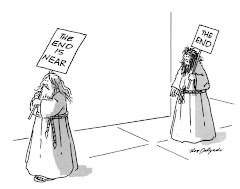
Cartoons on Beowulf

Well, not that I like getting my students to read my personal stuff. But I know nobody else who could get to understand cartoons on Beowulf. I won't discuss if such a thing is at all desirable, but if you happen to be wasting time on this winter break, just go on relaxing here.

(If you dare, see more here)

Friday, May 7, 2010

A myth of the good immigrant?

Yesterday in our L&C IV class, while discussing Anglo-Saxonism and the fabrication of originary myths in  England, the issue of Argenine domestic myths naturally cropped up. In this respect, I remembered a brief article I posted two years ago after a different debate in L&C III. The article however is very much connected with our own discussion. Let me invite you to read that article in If I may say so... (click here). You will also find links to very interesting papers that may enlighten your perception on the issue if you happen to be interested in deepening on the issue.
In any case, let me also propose an exchange: Can any of you think of other possible national myths?

Sunday, April 25, 2010

Forum 10: King Arthur: Myth or Truth? (by Cecilia Acosta)


Last year we read the text “The Coming of the Saxons, or English 449(?) A.D. The Battles of the Tribes - Britain Becomes England” by D.H. Montgomery. The author depicts King Arthur’s battles in Dorsetshire as something ambiguous. At first, he provides certain expressions such as “The legend,” “According to tradition,” or “it is said.” These phrases give the impression that the author’s believes in the mythical nature of King Arthur. However, at the end of the same paragraph, the author mentions that this British Prince “was not a myth but a man.” So, the point of discussion was: “Did King Arthur really exist? Or this king and his sword “Excalibur” are just part of an ancient legend?” What do you think?


Saturday, November 14, 2009

Robinson and 'El Eternauta' (by Cecilia Acosta)


I remember that in 3rd year of L&C we worked with “Robinson Crusoe,” a novel written by Daniel Defoe and first published in 1719. This year, in L&C IV, we were asked to write a paper in which one of the elements chosen by me was the Argentinian comic book “El Eternauta”, by Héctor Oesterheld.
So why am I mentioning this? This is because after reading “El Eternauta,” I found out that there are many connections and references to “Robinson Crusoe”.

“Siempre me fascinó la idea del Robinson Crusoe. Me lo regalaron siendo muy chico, debo haberlo leído más de veinte veces. EL ETERNAUTA, inicialmente, fue mi versión del Robinson. La soledad del hombre, rodeado, preso, no ya por el mar, sino por la muerte. Tampoco el hombre solo de Robinson, sino el hombre con familia, con amigos. (…). Ese fue el planteo. Lo demás… lo demás creció solo (…)”
Oesterheld in “El Eternauta” Collection “La Biblioteca Argentina / Serie Clásicos.” Clarín, 2000.
Robinson Crusoe is a young man who goes to sea looking for adventures. As a sailor, he travels to different places of the world. The turning point appears when in one of his travels a terrible shipwreck occurs and Robinson is the only survivor. He is forced to live twenty seven years in a desert island. The rest of the book tells how Robinson meets a tribe of cannibals and how he manages to survive in the unknown land.
“The Eternauta” tells the story of Juan Salvo, later known as El Eternauta, who is inside a house with his family and some friends playing poker. Suddenly, a deadly snowfall starts covering the earth and wiping out most of life in a few hours. After reading a couple of pages the reader realizes that this snowfall is caused by an extraterrestrial invasion to the Earth. Juan Salvo and his family and friends survive the snowfall because they are protected by the house, which is closed, leaving no space for the snow to enter. They soon get organized making special suits to leave the house and gather supplies. The rest of the book tells how the survivors from different parts of Buenos Aires join in an improvised resistance army to fight the invaders back.
What the author describes is that Juan Salvo in “El Eternauta” lives in his house, separated from the rest of the world, because of the deadly snow, and makes a parallelism with the desert island in the middle of the sea. However, as stated above in the quotation, he decided to place a group of people instead of one man alone.
He shows this idea in the comic, for example, when writing: “Éramos Robinsones que, en lugar de quedar atrapados en una isla, estábamos aislados en nuestra casa. No nos rodeaba el océano, pero sí la muerte.” Or in: “El viajero de la eternidad siguió narrando su historia, la tragedia que lo perdió en el tiempo, como si fuera un náufrago, abandonado en el medio del mar.”
Lastly, I would like to show a panel containing another phrase about the idea that I want to show…

This is why I highly recommend reading this national comic book if you have read Robinson Crusoe and of course, you’re invited to make your own connections.
And if you haven’t read it and you like Sci-fi as much as me, you should also give it a try. You won’t be disappointed at all…

Saturday, October 31, 2009

Forum 9: To Halloween or not to Halloween?


TV channels for children have been boasting about Halloween for almost two weeks, and people like my mother-in-law, with zero knowledge on Anglo-Saxon culture, get keen on filling children with Halloween products. In this context, and being myself very critical towards cultural/commercial colonization, I had to face the following dilemma: my 5-year-old daughter came to me and asked me to celebrate Halloween. What would you have done in my situation? And, why? I’d really like to hear your opinion.


Tuesday, October 20, 2009

Forum 8: The right literature for children


As we read some classes ago, Corbally sustains that “children’s literature is didactic (teaches/preaches); even the best of children’s literature is didactic.”
So, if we agree books for children are supposed to ‘teach’, what do you think they should teach? Or, the other way round: what do you think they should not teach? What topics are proper or improper for children’s literature to deal with?
Join the discussion!

Sunday, September 20, 2009

Forum 7: Are we really free?


Last year, when discussing the French Revolution, one of the questions posed was whether, two centuries after the Declaration of the Rights of Man and Citizen, we could still say that we are really free.
What's your opinion on this issue?

Friday, September 18, 2009

Portuguese colonies in Soth America (by Andrea Mariño)


First steps on the territory
Vicente Yáñez Pinzón, a Spanish navigator, was the first European to be known in the region of the territory today known as Brazil. By 1500, as he advanced northwards to the mouth of the Orinoco River, he found a territory which had been assigned to Portugal in 1494 by the Treaty of Tordesillas, signed by both the Spanish and the Portuguese Ambassadors at Tordesillas (in Northwest Spain),to mark by an imaginary line down through the Atlantic 370 leagues west of Cape Verde, Portugal´s most westerly possession, the division of the territory. According to this treaty, the land on the west side belonged to Spain and the land on the east side belonged to Portugal. Later the same year, a Portuguese navigator Pedro Álvares Cabral, reached the coast of present Brazil and named it Terra da Vera Cruz (Land of the True Cross). The following year, he Italian navigator, Amerigo Vespucci, was sent to Terra da Vera Cruz by the Portuguese government and when he returned with a cargo of the valuable red wood known as brazilwood, the government changed the name of the territory from Terra da Vera Cruz to Brazil.
King John III and the captaincies
In 1530, the Portuguese king John III, divided the colony into 15 districts or captaincies and granted them to 15 donatarios, whose heirs could found cities, grant land and even levy taxes over their territories. In 1549, Thomé de Souza, the first governor general of Brazil, made his headquarters at Bahia (today Salvador), which remained its capital city for over two centuries. He also brought large numbers of slaves to overcome the shortage of laborers, what led to the foundation of Sao Paulo in 1554. In 1555, the French founded a colony on the shores of the Rio de Janeiro Bay. However, the Portuguese destroyed it and in 1567 established on its site the city of Rio de Janeiro.

Brazil´s economy
During the First two centuries, Brazil´s economy was mainly based on the sugar trade but it was changed after the discovery of diamonds and other minerals in the region of Minas Gerais, in the north part of the colony. The mineral trade through the port of Rio de Janeiro gave this city prosperity and sophistication. These facts made Pombal, the chief minister of Portugal, move the capital, Bahia, to Rio de Janeiro in 1763.
Brazil becomes a Republic
A military revolt in November 1889, led by General Manuel Deodoro da Fonseca, forced Pedro II to abdicate the Regengy of Brazil. A republic was was proclaimed and Fonseca was elected head of the provisional government. The drafting of a constitution based on the American one was completed in June 1890 but it was not adopted until February 1891. Now, Brazil became a federal republic officially named United States of Brazil with Fonseca elected its first president.

Friday, September 11, 2009

Montréal’s Historical Summary (by Robert Quinteros)

In 1535, a French navigator, Jacques Cartier, arrived at Hochelaga. It was a village inhabited by St. Lawrence Iroquoians but he claimed the territory for France and gave the name Mont Royal to the mountain.
It is said that there was a supernatural flavor in the beginnings of the city. two religious gentlemen of France, the priest Jean Jacques Olier and the layman Jerome leRoyer de la Dauversiere, had at the same moment a dream in which they saw the configuration of the island, although they had not known of it before, and heard an inner voice convincing them to establish a new colony for the glory of God. The two men met and joint efforts to form a society called ‘La Compagnie de Notre Dame de Montreal’. On May 18, 1642, those men together with Paul de Chomedy De Maisonneuve, who was the first governor of the city, found Ville-Marie with about 60 settlers.
People were constantly attacked by natives, until in 1665, Carignan Regiment was order by New France to suppress the Iroquoians and ease tensions between both sides. At the end of the 17th century, the French gained permanent peace after the treaty La Grande Paix between the French and the Iroquois. At this time, Montréal began to prosper, it became the center of fur trade. The population was about 1,000 and they had the advantage of having inland navigation.
In 1775, Montréal was in war against the British and the city surrendered to British rule. They gave a new impetus to the life of the community, and at the end of the 18th century, Montréal had already taken the lead over the city of Quebec in population as well as in importance.
During the following years, there were fundamental improvements in transportation and industries. For instance, the expansion of the St. Lawrence canal system that made Montréal the principal seaport. The Railway construction made the city the hub of the railway system. Finally, Montréal was becoming a major industrial centre around the middle of the 19th century.
In the mid of 20th century, great projects took place in Montréal, such as the International World Exposition or EXPO 67 and the 1976 Summer Olympic games which gave status to the city.
After the 70s, there was high rate of unemployment, but Montréal regained a strong vitality from the mid-1990s and entered the 21st century with a modernized and buoyant economy based on international trade in basic products and on the distribution of manufactured goods.